Build to survive
Online: 404 Crafting Guide
Crafting in Online: 404 starts with research, not a menu. You find a problem, search the in-game internet for the how-to, gather what the district actually provides, and build at a workbench.
Post-launch: this guide will be fully updated within 48 hours of the Early Access release (Oct 16, 2026) with verified recipes and material counts. Until then, no exact recipe quantities are published here — the sources don't confirm them for the release build.
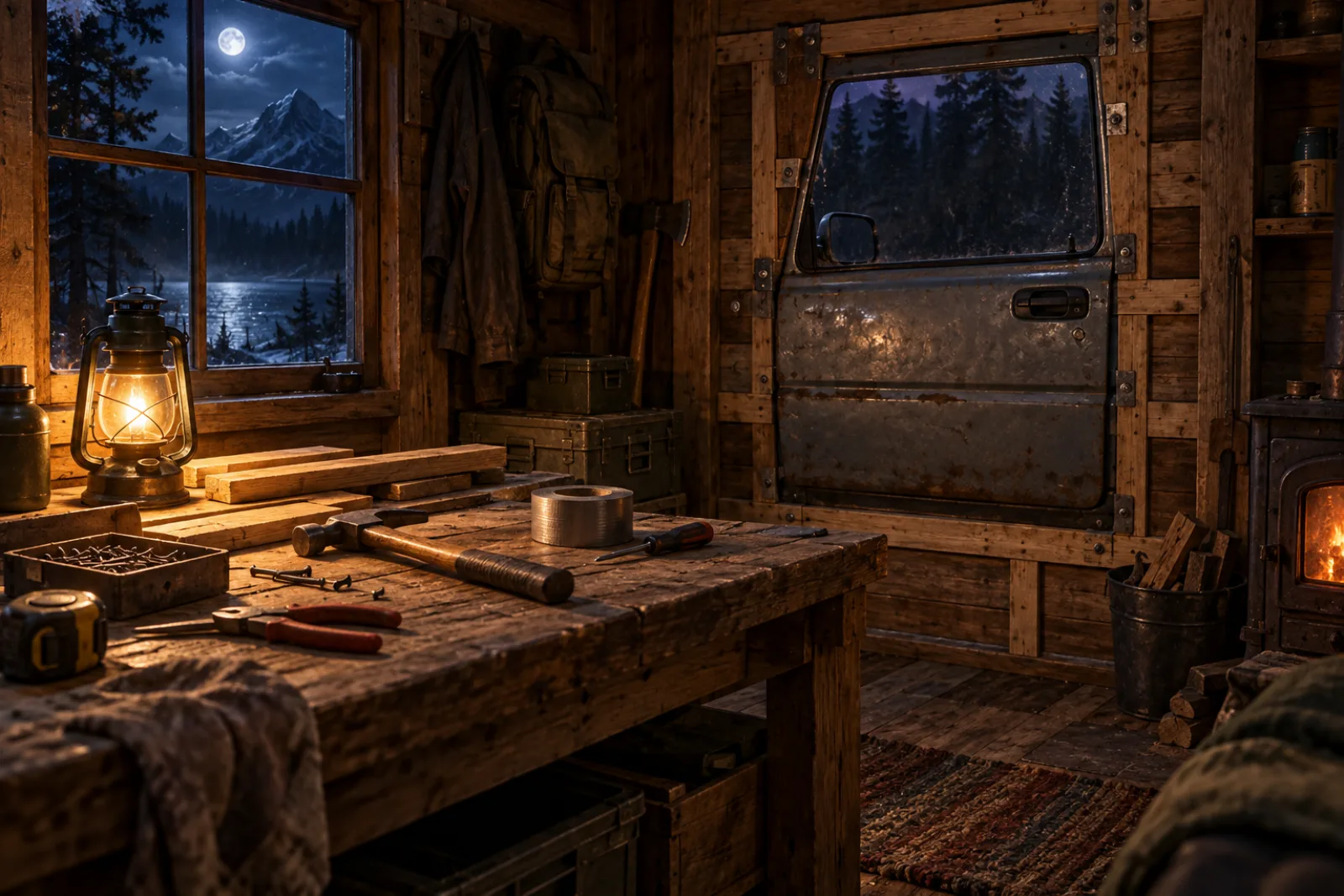
The crafting loop
- Hit a wall. You try to open a locked door, fix a car, or build something — and your character doesn't know how.
- Research it. Open the phone, search the in-game internet, and read the how-to. Ads and CAPTCHAs will slow you down; battery drain is the real cost. See the phone guide.
- Scavenge the materials. Wood is the main building material; metal scrap, cloth, nails, tin cans and vehicle parts all come from the world, not from a shop.
- Craft at the bench. The crafting menu lives in the phone's Notes app, with an indicator showing whether you're near a workbench (per a June 29, 2026 developer reply).
Demo-era detail: in the June 2026 demo, a workbench was built from junk, wood and metal scrap, and lockpicks could be produced from metal scrap once researched. Exact quantities are pre-release and TBA for the Early Access build.
Use what's around you — the scavenging rule
The design philosophy on the Steam page is blunt: a real person wouldn't smelt ore in a homemade furnace. You don't craft a solar panel from scratch — you take one off an abandoned house. Keep your eyes open: vehicles, houses, campsites and motels are all material sources.
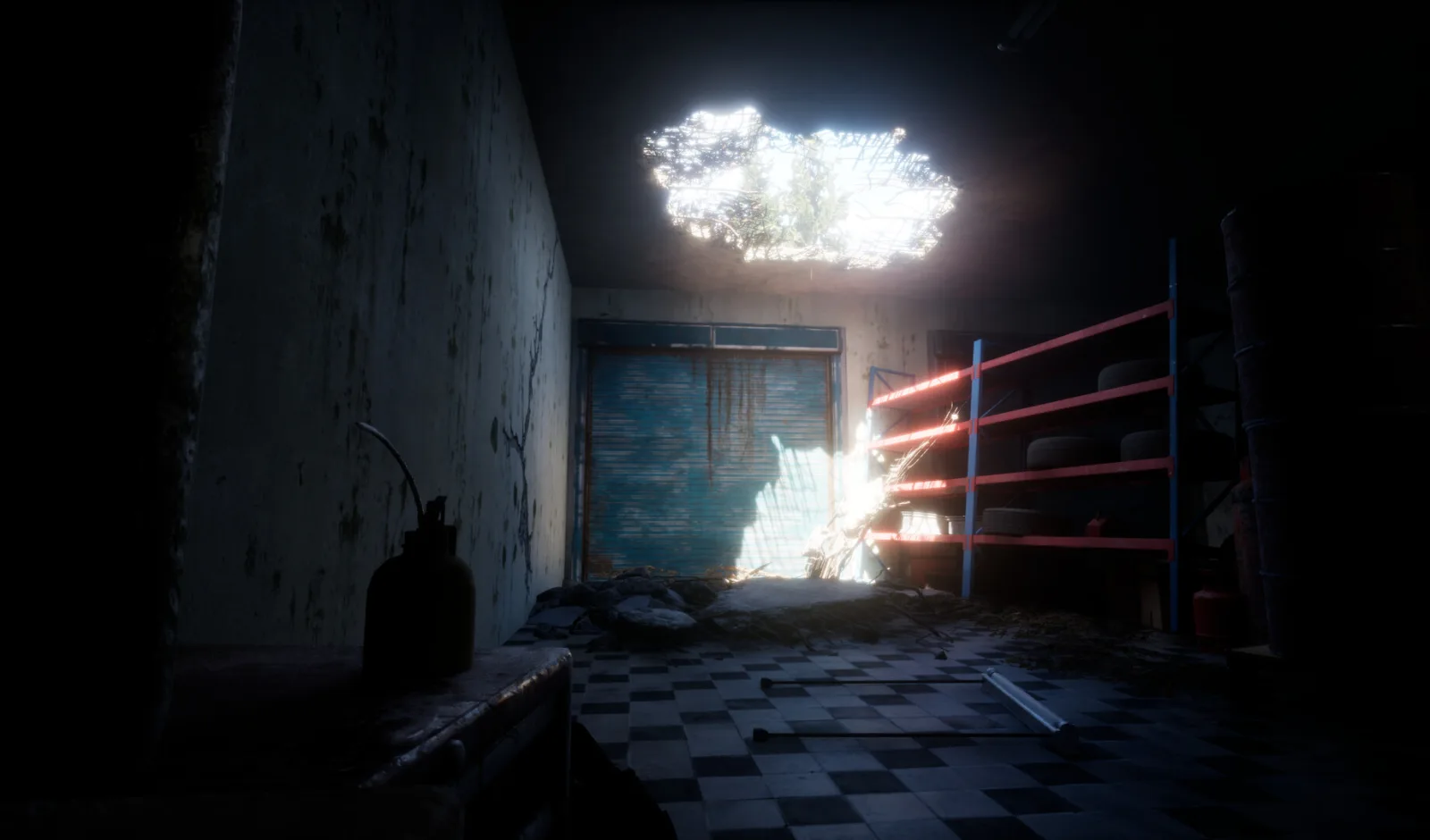
Confirmed scavenging targets from official and demo sources:
- Abandoned cars — doors and hoods (fortification), batteries, gasoline, attachments, lockpicks in glove boxes (demo-era), scrap.
- Buildings and motels — canned food, tools, bandages, tent gear.
- Camps and tents — power banks, wood, basic supplies.
- The environment — wood from chopping, mushrooms and herbs (identify safe ones online first), game animals from hunting.
Fortify your shelter
Wood builds the walls; salvage hardens them. The store page's own example: rip a car door or hood off an old vehicle and bolt it to your wooden wall, and raiders have a much harder time getting in. Base raids are a confirmed mechanic, so fortification is not optional decoration — it protects your stockpile.
Electricity
Electricity is a confirmed system and a long-term base goal. The confirmed route is scavenged solar panels pulled from abandoned houses rather than anything built from raw ore. What electricity powers at your shelter, and exact generation/storage numbers, are not yet confirmed — this section fills in after launch.
Vehicles: restore, don't build
Old cars can be restored and driven, which turns long district crossings into short trips. Restoration runs through the same research loop — demo players hit "you do not understand engines yet" and were told to look it up online. Cars are also material donors before they're transport: strip parts first if you can't fix one yet.
What we don't know yet (TBA)
- Full recipe list and material quantities for the release build
- Workbench tiers or upgrades, if any
- Weapon attachment crafting (a gun with attachment slots was seen in the demo)
- Whether any recipes are gated behind story progress
Where these facts come from
- Online: 404 on Steam (app 4094350) — wood as the main building material, car-part fortification, solar panel scavenging, hunting, farming, electricity and vehicle driving as launch mechanics.
- Steam Community hub — the June 29, 2026 developer reply on Notes-app crafting and the near-workbench indicator.
- June 2026 demo gameplay reports — workbench and lockpick recipes, loot locations (demo-era; subject to change).